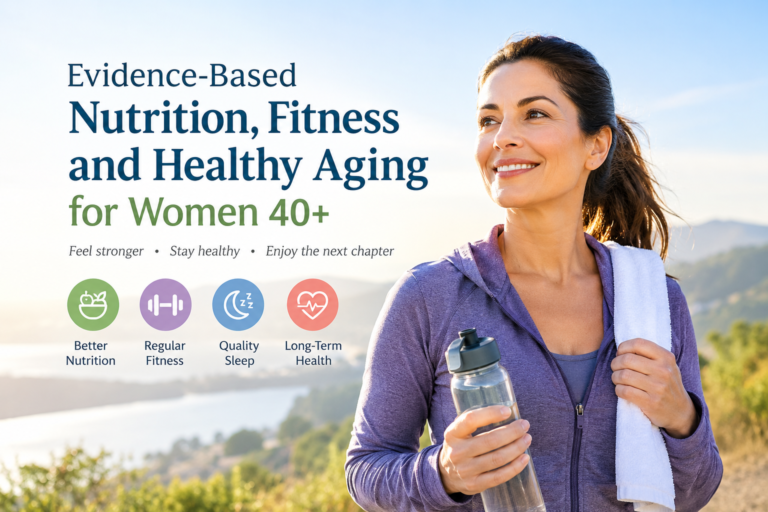
Healthy aging for women over 40: nutrition, strength, fitness, sleep and wellness tips to stay strong, active and independent.Healthy aging for women over 40 starts with practical habits that support muscle, bone, and heart health, steady energy, and long-term independence. During midlife, changes in hormones, sleep, activity, and recovery may affect how you feel—but you do not need an extreme diet or punishing workout plan to care for your health.
None of this means that healthy aging is out of your control.
The goal after 40 isn’t to follow an extreme diet or spend hours exercising every day. A more sustainable approach is to build habits that protect muscle, support bone and heart health, provide enough nutrients, and help you remain active and independent as you get older.
This evidence-informed guide to healthy aging for women over 40 explains how to eat well, build strength, stay active, support sleep, and create realistic habits that can last through your 40s, 50s, and beyond.
What Changes After 40? Understanding Midlife Health
There isn’t a biological switch that flips on your 40th birthday. Aging happens gradually, and the experience varies considerably from one woman to another.
However, several changes can become more noticeable during midlife.
Why Maintaining Muscle Matters After 40
Adults gradually lose muscle mass with age, particularly when they are inactive and don’t provide their muscles with enough resistance or protein.
This matters for more than appearance. Muscle supports strength, balance, mobility, glucose regulation, and everyday activities.
That’s one reason strength training becomes increasingly valuable as you move through midlife.
How Hormonal Changes Can Affect Body Composition
Perimenopause—the transition toward menopause—can begin several years before the final menstrual period. During this time, changing hormone levels can contribute to changes in menstrual cycles, sleep, body temperature, mood, and body composition.
Some women notice that weight becomes easier to gain around the abdomen. However, not every change in body weight or shape is caused by hormones alone. Activity levels, calorie intake, sleep, stress, medications, genetics, and aging itself can all play a role.
Protecting Bone Health After 40
Bone loss accelerates around menopause because declining estrogen levels can affect bone remodeling.
That makes adequate calcium and vitamin D, regular weight-bearing activity, and resistance training important parts of a long-term bone-health strategy.
Women with risk factors for osteoporosis may need individualized screening or treatment from a healthcare professional.
Recovery, Sleep, and Exercise After 40
You don’t necessarily need to exercise less after 40, but you may benefit from being more deliberate about recovery.
Adequate sleep, nutrition, rest days, hydration, and gradually increasing training loads can help you remain active without constantly feeling exhausted.
Nutrition for Women Over 40: What Your Body Needs

There is no single “best diet” for every woman over 40.
For additional guidance on balanced meals and nutrient-rich foods, explore this guide to healthy eating as you age.
Mediterranean-style eating, plant-forward diets, higher-protein approaches, and other balanced dietary patterns can all work when they provide adequate nutrition and can be maintained over time.
Rather than obsessing over individual foods, build your meals around a few nutritional priorities.
1. Prioritize Protein to Maintain Muscle
Protein becomes particularly important during midlife because maintaining muscle requires regular resistance exercise as well as adequate protein intake.
Good sources include:
- Eggs
- Fish and seafood
- Chicken and lean meats
- Greek yogurt and cottage cheese
- Milk and fortified dairy alternatives
- Beans and lentils
- Tofu and tempeh
- Nuts and seeds
Other minimally processed protein-rich foods
Instead of eating most of your protein at dinner, try distributing protein across your meals.
For example, breakfast could include eggs and Greek yogurt, lunch could contain beans or chicken, and dinner could include fish, tofu, or another protein source.
Your individual protein needs depend on factors such as body size, activity level, health status, and goals. Women with kidney disease or certain medical conditions should discuss protein intake with their healthcare professional.
Eat More Fiber-Rich Foods for Digestive Health
Fiber supports digestive health and can also help with fullness, blood glucose management, and cardiovascular health.
Aim to regularly include:
- Vegetables
- Fruits
- Beans
- Lentils
- Whole grains
- Nuts
- Seeds
If your current diet is low in fiber, increase it gradually and drink enough fluids. A sudden large increase can cause bloating or digestive discomfort.
3. Choose Healthy Fats for Heart Health
Fat is an essential nutrient and an important part of a balanced diet.
Choose sources such as:
- Extra-virgin olive oil
- Avocados
- Nuts
- Seeds
- Fatty fish
Replacing some foods high in saturated fat with unsaturated-fat sources can be beneficial for cardiovascular health.
This doesn’t mean you need to eliminate every food containing saturated fat. The overall pattern of your diet matters more than one ingredient eaten occasionally.
4. Make Plant Foods a Foundation of Your Diet
Try to make vegetables, fruit, legumes, and whole grains regular parts of your meals.
Different plant foods provide different combinations of fiber, vitamins, minerals, and beneficial plant compounds.
A simple goal is to make your plate colorful.
Instead of thinking:
“I need to eat perfectly.”
Think:
“How can I add one more nutritious food to this meal?”
That small change is easier to maintain.
Are Carbohydrates Healthy After 40?
Carbohydrates are not automatically unhealthy, and most women don’t need to eliminate them.
The more useful question is which carbohydrates you eat and how much you need.
Whole grains, beans, lentils, fruits, and vegetables provide carbohydrates along with fiber and other nutrients.
Highly refined carbohydrates and sugary foods can still fit into an overall healthy diet, but they generally shouldn’t displace more nutrient-dense foods.
If you have diabetes, prediabetes, insulin resistance, or another condition affecting blood glucose, your carbohydrate needs may require a more individualized approach.
Should Women Over 40 Take Supplements?
Supplements can be useful when they correct a deficiency or address a specific nutritional need, but they aren’t a substitute for a balanced diet.
Common nutrients that deserve attention during midlife include:
Calcium for Bone Health
Calcium is important for maintaining healthy bones and normal muscle and nerve function.
Food sources include dairy products, calcium-fortified plant milks, tofu made with calcium, some fish, and certain leafy greens.
Learn more about calcium sources, recommended intake, and supplementation in this guide to calcium requirements and bone health.
Vitamin D and Calcium Absorption
Vitamin D helps the body absorb calcium and supports bone and muscle health.
Your needs depend partly on sun exposure, diet, age, geography, skin characteristics, and other factors. If you’re concerned about deficiency, ask your healthcare professional whether testing or supplementation is appropriate.
Iron Needs Before and After Menopause
Iron needs change after menopause because menstrual blood loss stops.
Women who still menstruate may have significant iron requirements, particularly if they experience heavy periods.
Iron supplements shouldn’t be taken routinely without a reason because excessive iron can also be harmful.
Vitamin B12 for Energy and Nerve Health
B12 is essential for red blood cell formation and neurological function. Absorption can become more difficult with age, and certain medications and dietary patterns can increase the risk of deficiency.
People following a vegan diet generally need a reliable source of vitamin B12 through fortified foods or supplements.
The important principle is simple:
Supplement when there is a reason—not simply because a bottle promises “better aging.”
Strength Training for Women Over 40
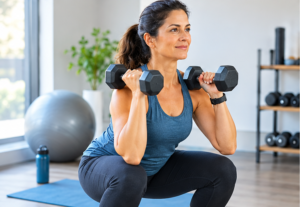
If you could choose only one type of exercise to emphasize for healthy aging, resistance training deserves serious consideration.
Strength training helps preserve and build muscle, supports bone health, improves functional strength, and can make everyday activities easier.
You don’t need a gym to begin.
Exercises can include:
- Squats
- Lunges
- Step-ups
- Push-ups
- Rows
- Hip hinges
- Glute bridges
- Overhead presses
- Resistance-band exercises
- Free-weight exercises
- The key is progressive challenge.
If you can comfortably perform an exercise for many repetitions without feeling challenged, you may eventually need to increase the resistance, repetitions, range of motion, or difficulty.
Start at an appropriate level and progress gradually.
If you have an injury, osteoporosis, significant joint problems, or another medical condition, get individualized guidance before starting a new resistance-training program.
Cardio Exercise for Heart Health
Strength training isn’t the only exercise you need.
Aerobic activity supports cardiovascular fitness and can improve health in many ways.
Good options include:
- Brisk walking
- Cycling
- Swimming
- Jogging
- Dancing
- Hiking
- Rowing
- Group fitness classes
You don’t have to do one particular exercise.
The best activity is one you can perform safely and consistently.
Current physical-activity guidelines generally encourage adults to accumulate regular moderate-intensity aerobic activity each week and perform muscle-strengthening activities on at least two days per week.
You can break activity into smaller sessions if finding a continuous block of time is difficult.
Ten or fifteen minutes of movement is still more useful than sitting all day because you couldn’t fit in a one-hour workout.
Benefits of Walking After 40
Walking doesn’t look impressive on social media, but it is one of the most practical forms of physical activity.
Regular walking can help increase daily energy expenditure, support cardiovascular health, improve mobility, and reduce sedentary time.
You can make it more challenging by:
- Walking faster
- Walking uphill
- Increasing duration
- Adding short intervals
- Carrying appropriate weights when safe
Walking is particularly useful because it can complement strength training without placing the same demands on the body as high-intensity exercise.
Improve Balance and Mobility as You Age
Healthy aging isn’t just about how much weight you can lift.
You also want to remain capable of:
- Getting up from the floor
- Climbing stairs
- Carrying groceries
- Reaching overhead
- Getting in and out of a car
- Walking on uneven surfaces
- Maintaining balance
Include mobility and balance exercises alongside strength and cardiovascular training.
Yoga, Pilates, tai chi, controlled bodyweight exercises, and simple balance drills can all have a place in a well-rounded routine.
Menopause, Weight Gain, and Body Composition
Weight gain during midlife is a common concern, but it’s important not to blame every change on menopause.
As women age, several factors can overlap:
- Hormonal changes
- Reduced physical activity
- Loss of muscle
- Changes in appetite
- Sleep disruption
- Stress
- Changes in eating habits
- Aging-related changes in energy expenditure
- The result can be gradual changes in body composition.
Extreme calorie restriction isn’t necessarily the answer.
A better strategy is to focus on:
Protein + resistance training + high-fiber foods + regular movement + adequate sleep + sustainable portions.
If you are gaining weight rapidly or unexpectedly, particularly alongside other symptoms, speak with a healthcare professional rather than assuming it is simply menopause.
How to Manage Belly Fat After 40
Abdominal fat can become more noticeable during midlife, but there is no food or exercise that selectively burns belly fat.
You cannot choose where your body loses fat.
Instead, focus on overall health and body composition.
A combination of:
- Resistance training
- Regular aerobic activity
- Adequate protein
- High-fiber foods
- Appropriate calorie intake
- Good sleep
- Stress management
- can support healthy body composition over time.
Avoid products that promise to “melt belly fat” or dramatically accelerate metabolism. These claims often go far beyond the available evidence.
Sleep Tips for Women Over 40

Adults generally need around seven or more hours of sleep per night, although individual needs vary.
Unfortunately, sleep can become more difficult during perimenopause and menopause.
Night sweats, hot flashes, stress, routine changes, and other factors can disrupt sleep.
Helpful habits include:
- Keeping a consistent sleep schedule
- Limiting caffeine later in the day
- Keeping the bedroom cool and comfortable
- Getting regular daytime physical activity
- Limiting alcohol
- Creating a relaxing pre-bed routine
- Reducing bright light and stimulating activities before bed
- Persistent insomnia, loud snoring, gasping during sleep, or severe daytime sleepiness deserves medical attention.
Stress Management for Healthy Aging
Midlife can be demanding.
Women may be balancing work, family responsibilities, caregiving, relationships, financial pressures, and changing health needs.
Chronic stress can make healthy habits harder to maintain.
You don’t need an elaborate wellness routine.
Simple strategies can help:
- Walking outdoors
- Spending time with friends
- Breathing exercises
- Meditation
- Journaling
- Reading
- Yoga
- Time away from screens
- Hobbies you genuinely enjoy
The goal isn’t to eliminate stress. That’s unrealistic. The goal is to develop healthy ways of responding to it.
A Sample Day of Healthy Eating for Women Over 40
Healthy eating doesn’t require complicated recipes or expensive ingredients.
Here’s an example of what a balanced day might look like.
Breakfast
Greek yogurt with berries, oats, chia seeds, and nuts.
Lunch
A large salad or grain bowl containing vegetables, chickpeas or chicken, whole grains, and olive oil-based dressing.
Snack
Fruit with a handful of nuts or yogurt.
Dinner
Grilled fish, tofu, beans, or lean meat with vegetables and potatoes, brown rice, or another whole-grain carbohydrate.
Drinks
Water throughout the day, with tea or coffee if desired.
This is only an example—not a prescription or mandatory meal plan.
Healthy eating can look very different across cultures.
A Mediterranean diet, South Asian diet, East Asian diet, Latin American diet, or another traditional dietary pattern can all be adapted to support good health.
The principles matter more than eating foods from one particular culture.
A Weekly Fitness Plan for Women Over 40
You don’t need to train every day. A simple week could look like this:
Monday: Full-body strength training
Tuesday: 30–45-minute brisk walk
Wednesday: Strength training + mobility
Thursday: Walking, cycling, swimming, or another aerobic activity
Friday: Full-body strength training
Saturday: Longer walk, hike, recreational activity, or fitness class
Sunday: Rest or gentle movement
This is only a template.
If you’re new to exercise, start with less and gradually build up.
Consistency matters more than creating the perfect program on paper.
Healthy Aging Habits to Start Today
If the amount of health advice online feels overwhelming, simplify it.
Focus on these fundamentals:
Eat enough protein.
Include a protein source in your main meals.
Eat plenty of plants.
Vegetables, fruit, legumes, whole grains, nuts, and seeds should appear regularly.
Strength train.
Give your muscles a reason to stay strong.
Move every day.
Walking and everyday movement count.
Do cardiovascular exercise.
Keep your heart and lungs challenged regularly.
Protect your bones.
Combine resistance and weight-bearing exercise with adequate nutrition.
Sleep enough.
Treat sleep as part of your health—not wasted time.
Maintain social connections.
Relationships and community are important parts of healthy aging.
Avoid smoking.
If you smoke, getting support to quit can have major health benefits.
Keep alcohol moderate or avoid it.
Less is generally better for health, and some people should avoid alcohol completely.
Keep up with preventive healthcare.
Screenings, vaccinations, blood pressure checks, cholesterol testing, and other preventive care should be discussed according to your age, risk factors, and location.
When to Speak With a Healthcare Professional
Lifestyle changes can support health, but they don’t replace medical care.
Speak with a healthcare professional if you experience symptoms that concern you, including:
Unexpected or rapid weight changes
- Persistent fatigue
- Chest pain
- Shortness of breath
- Unusual bleeding
Severe or persistent headaches - Significant changes in mood
- Persistent sleep problems
- Symptoms of osteoporosis or fractures
- New or worsening menstrual abnormalities
- Any symptom that feels unusual or unexplained
- Women with diabetes, cardiovascular disease, kidney disease, osteoporosis, eating disorders, or other medical conditions may need individualized nutrition and exercise advice.
Healthy Aging Is About Strength, Not Perfection
One of the biggest mistakes women can make in midlife is believing that healthy aging requires becoming stricter.
- Another restrictive diet.
- Another detox.
- Another 30-day challenge.
- Another supplement.
- Another attempt to look like you did at 25.
- A healthier goal is different.
Ask yourself:
Can I get stronger?
Can I eat in a way that gives me energy?
Can I maintain my muscle and bone health?
Can I sleep better?
Can I stay active enough to do the things I enjoy?
Can I build habits I can still follow five or ten years from now?
Those questions shift the focus from appearance to health and function.
Your 40s, 50s, 60s, and beyond can be active and healthy years. You don’t need to pursue perfection. You need a sustainable foundation built around nutritious food, regular movement, strength, sleep, preventive healthcare, and habits that fit your actual life.
Healthy aging isn’t about stopping the clock. It’s about giving your future self the strength, health, and independence to enjoy it.
For more evidence-based information about nutrition, physical activity, sleep, and long-term well-being, explore these healthy aging tips backed by research.
Medical Disclaimer
This article is for general educational purposes and is not a substitute for individualized medical advice, diagnosis, or treatment. Nutritional and exercise needs vary from person to person. If you have a medical condition, take medication, are pregnant, have a history of an eating disorder, or are concerned about new symptoms, consult an appropriately qualified healthcare professional.