

Introduction
Good sleep feels elusive for many busy adults. Racing thoughts, late-night screen time, and daily stress often keep the mind alert long after bedtime. That is why interest in magnesium glycinate for sleep has grown so quickly among readers seeking a gentle, non-habit-forming option.
What Is Magnesium Glycinate?

Magnesium is an essential mineral that supports muscles, nerves, and heart rhythm. Glycinate is magnesium bound to glycine, a calming amino acid. This chelated form dissolves well and is usually gentle on the stomach, which is one reason health-conscious readers prefer it over harsher forms.
Why Many People Take It for Sleep and Anxiety
Unlike some other forms that may upset the stomach, this chelated form is known for good absorption and a calming reputation. When people research magnesium glycinate for sleep, they often mention quieter evenings, fewer nighttime muscle cramps, and a more relaxed bedtime routine.
Friends and family often describe the effect as subtle rather than sedative. The person still needs healthy sleep habits, but falling asleep may feel easier when stress is lower and muscles feel relaxed.
Key Benefits Reported by Users and Researchers
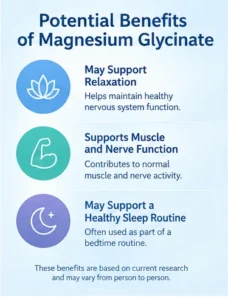
- 1Calmer evenings – Glycine and magnesium both play roles in nervous system balance.
- Muscle comfort – Many adults take it to ease tight calves, twitches, or restlessness at night.
- Better sleep routine – When combined with dim lights, herbal tea, and no late caffeine, it may help the body wind down.
- Daytime ease – A well-rested person often handles worry and irritability better the next day.
Scientists continue to study these effects, and results vary from person to person. It is not a cure for insomnia or anxiety disorders, but a supportive part of a healthy lifestyle.
Magnesium Glycinate Dosage for Sleep: How Much Do People Usually Take?

Finding the right magnesium glycinate dosage for sleep depends on age, diet, and health status. Most over-the-counter capsules provide 100 to 200 mg of elemental magnesium per serving.
Common third-person guidance often looks like this:
- Beginners often start low, with around 100 to 200 mg in the evening.
- Many adults use 200 to 350 mg daily from all supplements combined, unless a doctor advises otherwise.
- Readers are encouraged to read labels carefully, because total capsule weight is not the same as elemental magnesium.
A healthcare professional should guide long-term use, especially for older adults, pregnant women, or anyone with kidney issues.
Best Time to Take It and How to Use It
Most people take it 30 to 60 minutes before bed with a small glass of water. Taking it with a light snack may reduce stomach discomfort. Consistency matters more than timing. A regular evening ritual — same bedtime, dark room, and limited phone use — helps the supplement work as part of a calming routine.
Magnesium Glycinate vs Citrate: Which Is Better?
The debate around magnesium glycinate vs citrate comes up often in wellness groups. Both forms absorb better than oxide, but they serve slightly different needs.
When comparing magnesium glycinate vs citrate, readers may notice that glycinate is usually chosen for relaxation and nighttime use, while citrate is often chosen for digestion and regularity because it can have a mild laxative effect. Someone prone to loose stools often prefers glycinate, while someone dealing with constipation may prefer citrate.
How Long Does Magnesium Glycinate Take to Work?
Patience is important. Some people feel more relaxed within a few evenings, while steady sleep changes often take one to two weeks of consistent use. Diet, caffeine, stress levels, and screen habits all affect the timeline. If no change appears after three to four weeks, readers often check their habits or speak with a clinician.
Safety, Side Effects, and Who Should Be Careful
When taken in moderate amounts, it is well tolerated. High doses may cause nausea, loose stools, or drowsiness. People with kidney disease, low blood pressure, or those taking antibiotics, diuretics, or bone medicines should seek medical advice first.
FAQs
Is it habit-forming? No evidence suggests dependence when used as directed.
Can it be taken every night? Many adults do, but long-term nightly use should be reviewed by a professional.
Does diet matter? Yes. Leafy greens, nuts, seeds, and whole grains provide natural magnesium and support the benefits of magnesium glycinate for sleep.
Conclusion
For readers searching for a gentle nighttime aid, magnesium glycinate for sleep offers an appealing mix of tolerability, calm, and routine support. With sensible dosing, good timing, and healthy sleep habits, it may help many adults rest more peacefully.